
Beyond the Diagnosis: 2 weeks at the Christie Cancer Hospital
Written by Anagha Nayak (5th year medical student)

Hi! I am Anagha Nayak, a final-year medical student at the University of Buckingham.
This summer, I spent two weeks shadowing doctors at the largest single-site cancer centre in Europe. From sitting in clinics to observing theatres and multidisciplinary meetings, my Student Selected Component at the Christie in Manchester gave me a glimpse into a specialty I previously had limited exposure to. More importantly, it challenged some of my assumptions about what oncology, and being an oncologist is truly about. So, if you are a medical student considering oncology, here are some things that I have taken away from this experience.
As part of my final year clinical rotations, I spent six weeks at the Christie Wing of my base hospital. It was during this rotation that my interest in oncology began to grow. I was fortunate to meet consultants who specialised in various aspects of oncology, each providing a distinct perspective on the comprehensive nature of cancer care and the diverse career pathways available within the field.
By the end of my rotation, I was certain that I wanted to delve deeper into the specialty. When the opportunity to undertake my SSC in oncology came around, I reached out to some of the doctors I had previously shadowed. I was incredibly fortunate that they were willing to supervise me and welcome me to The Christie in Manchester for two weeks.
Once my SSC was approved and everything was finalised, I received my timetable from my supervisors. It mapped out two weeks that would take me through different areas of oncology, giving me the opportunity to see the specialty from a much broader perspective than I had encountered during my usual clinical rotations.
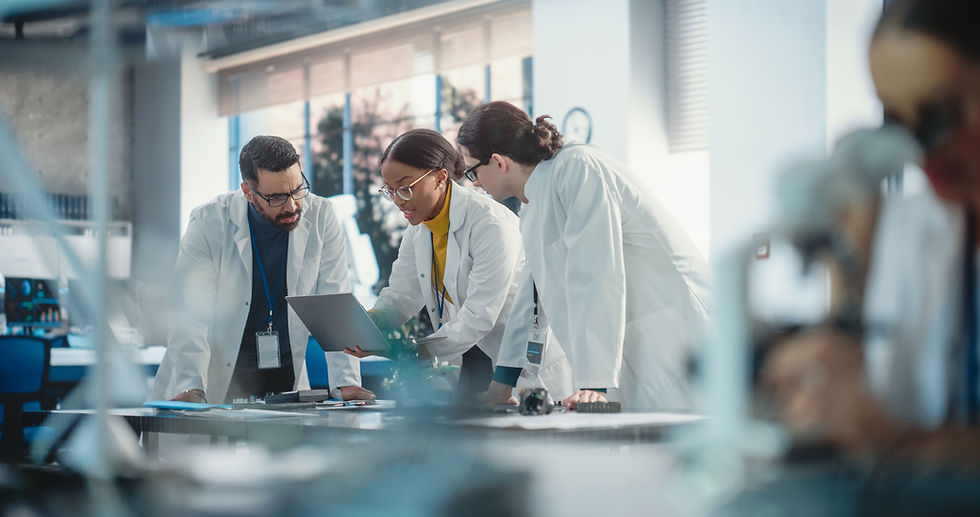
Throughout my SSC, I met doctors who were contributing to oncology in so many different ways. I saw the specialty from several perspectives: from clinical research and academia to the day-to-day reality of caring for patients. I was fascinated by how much goes into a patient's journey through cancer care. I followed patients from their initial consultations through to radiotherapy planning and treatment and had the opportunity to observe procedures such as brachytherapy and see how complications were managed. It gave me a glimpse into the science behind cancer treatment, but also into the many different directions a career in oncology can take.
Yet, as interesting as the medicine was, it was the human side of oncology that stayed with me most.
Every healthcare professional I met seemed to bring a genuine sense of responsibility to their patients. I noticed the care taken with each consultation, the sensitivity with which difficult conversations were approached and, perhaps most importantly, the continuity of care that developed between doctors and their patients. These were not simply appointments about scans, blood results or treatment plans. There was a real sense that each patient was being cared for as a person.
I went into my first day unsure of what to expect. Oncology had always seemed to me like a particularly heavy and, in some ways, morbid area of medicine. By the end of the two weeks, that perception had changed. I saw how every doctor brought their own personality and individuality into their work, while still sharing the same commitment to their patients. There was warmth in the way they spoke to people, patience in the way they listened and a genuine sense of responsibility for the journey each patient was going through.
That, more than anything, showed me the kind of medicine I have always wanted to practise.
A cancer diagnosis can change someone's life in an instant. I came to realise that while doctors cannot always change the diagnosis or predict the outcome, they can change what it feels like for a patient to go through it. Knowing that there is someone who will listen, explain, advocate, and stand beside you through some of the most difficult moments of your life can make an enormous difference.
That is the side of cancer care I hope to be on one day. And if I do pursue oncology, I hope I can carry with me some of what I saw at The Christie: the knowledge, the curiosity and, above all, the humanity.



Comments